
What does kosen-rufu actually look like?”
Ikeda Sensei once painted this picture:
All around us, towers of base impulses have risen skyward—towers of authoritarianism that block the sun; gilded towers of economic supremacism; towers of military dominance that cast dark shadows of death. … Our struggle is to replace those towers with towers of humanity, towers of happiness, towers of life.[1]
Our Soka movement aims to build those treasure towers of humanity throughout society and the world. The greatest way to do this is one person at a time—helping each individual reveal their inner treasure tower, their boundless potential for good.
When we talk about our kosen-rufu movement, we’re really talking about creating a world rooted in the ideals of Buddhist humanism, one that upholds equality and respect for the dignity of life.
This year, we’re launching a new series exploring familiar Buddhist concepts and how we can apply them to daily life. Over the next 12 months, we will study these life-changing principles together and deepen our conviction that our Buddhist practice provides the basis for transforming our lives and the world around us. We start with the topic of kosen-rufu. So… let’s talk about it!
What It Means to Achieve Kosen-rufu
Kosen-rufu—how do we accomplish it? Is it achieved when every person on this planet chants Nam-myoho-renge-kyo? Or when there are no more wars on Earth?
Sensei once clarified: “Kosen-rufu is the spread of the Mystic Law from one person to another. … Yet, kosen-rufu is not about numbers. It is a process, an eternal flow.”[2] Put simply, rather than a fixed goal, it is an ongoing movement, an ever-widening current of people who live by and spread the ideals of respect for all life.
The term kosen-rufu itself carries deep meaning. You may have heard it defined as “world peace through individual happiness,” but this definition doesn’t quite underscore its true significance. Breaking down the Chinese characters used to write kosen-rufu, Sensei once explained:
Kosen means to widely declare. “Widely” implies speaking out to the world, to an ever-greater number and ever-broader spectrum of people.
“Declare” means to proclaim one’s ideals, principles and philosophy. The ru of rufu means a current like that of a great river. And fu means to spread out like a roll of cloth. … Rufu means to flow freely, to reach all.[3]
In other words, kosen-rufu means to widely declare or spread the Buddha’s teaching so that it flows throughout society.
The Great Desire for Widespread Propagation
The term comes from “Former Affairs of the Bodhisattva Medicine King,” the 23rd chapter of the Lotus Sutra, which reads:
After I [Shakyamuni Buddha] have passed into extinction, in the last five-hundred-year period you must spread it abroad widely (kosen-rufu) throughout Jambudvipa and never allow it to be cut off.[4]
Nichiren Daishonin dedicated his life to fulfilling this injunction by Shakyamuni Buddha. He believed that the way to lead all people to happiness in the Latter Day was to cultivate the Buddha nature in oneself and others, and he revealed Nam-myoho-renge-kyo as the means to do so. Sensei once shared: “Kosen-rufu is nothing other than expanding the network of those who share this conviction and who proceed accordingly. It was the Daishonin who set in motion the flow of kosen-rufu.”[5]
This great desire for widespread propagation was the spiritual pillar of Nichiren’s life. “‘Great desire,’” Sensei writes, “refers to the boundless wish arising from the Buddha’s enlightenment. It is the ‘original desire of life’ in the heart of the Buddha awakened to the truth that life itself is the entity of the Mystic Law. … To ‘awaken’ means to remember this original desire.”[6]
Through chanting Nam-myoho-renge-kyo to the Gohonzon with the great wish to realize kosen-rufu, we align our hearts with the Buddha’s vow—the deep wish to help all people awaken to their inherent dignity. We tap into the same vast life state exemplified by the Buddha.
This means that our practice of faith is not static. The more we act and pray for kosen-rufu, the more our lives reveal the Buddha’s immense life state and potential.
Human Revolution Is at the Heart of Kosen-rufu
At times, the task of realizing kosen-rufu can feel too ambitious to grasp. But Sensei reminds us that it all begins with the courageous work of transforming our own lives. Our daily efforts to improve our circumstances, to elevate our inner state of life and to become happy are vital to advancing kosen-rufu. When we change, that change can bring light to all those around us.
Kosen-rufu doesn’t just happen through spreading Buddhist ideas and terms. It happens with each of us “rising to action wherever we are in the world and bravely striving to transform our karma through our practice.”[7]
Sensei also said:
You can also think of your human revolution as undertaking kosen-rufu in the microcosm of your own world. When many individuals pursue their human revolution, they can advance the kosen-rufu of society as a whole. In other words, kosen-rufu is advanced in direct proportion to the strides we make in our human revolution.
At the same time, when we abandon selfish interests and devote ourselves to kosen-rufu, a movement to lead others to happiness, our human revolution will progress. That is how closely the two are related.[8]
Each time we challenge our negativity, awaken to our inner Buddhahood and take responsibility for our environment, we are advancing kosen-rufu in the microcosm of our own lives. And the relationship works both ways. When we take action to spread Buddhism, encourage a friend or support our local discussion meetings, we grow by discovering and strengthening our own abilities.
That’s why kosen-rufu isn’t something happening “somewhere out there.” It’s unfolding right where we stand—in our families, workplaces, neighborhoods and communities. The great flow of kosen-rufu is the collective effort of countless individuals deciding, again and again, to live with courage and compassion based on utmost respect for oneself and others.
Changing the Destiny of Humankind
Nichiren Buddhism teaches that the transformation of one person’s life can change the destiny of all humankind. The goal of kosen-rufu, then, is not just the spread of Buddhist philosophy but the elevation of the life state of humanity itself. Sensei writes:
Ending war is the natural mission of Buddhism, which aims to protect the sanctity of life and to lead all people to the supreme life state of Buddhahood.
People living in the Latter Day tend to be swept along from one conflict to the next as if caught in a torrent. The only way to stop this is for people to bring forth their own Buddha nature. Therefore, revealing the world of Buddhahood within us is the most fundamental path to peace.[9]
When we bring forth the world of Buddhahood within us, we reveal something more powerful than the destructive tendencies (fundamental ignorance) inherent in life.
Sensei said: “The Buddha yearns for the happiness of all people and continually works for the sake of those who are unhappy. This is the Buddha’s spirit; this is the challenge of kosen-rufu.”[10]
To lead even one person to genuine happiness, he reminds us, is a profound and noble act: “To simply talk of universal happiness is easy. To lead even one person to happiness, however, is difficult.”[11] Yet it is precisely this effort, one sincere dialogue, one compassionate action at a time, that changes the course of history.
British historian Arnold J. Toynbee likened it to a slow and steady current beneath the surface of world events: “The things that make good headlines attract our attention because they are on the surface of the stream of life … But of course it is really these deeper, slower movements that, in the end, make history.”[12] This is how the work of ordinary people, striving for the happiness of others, becomes the unseen force shaping the future. Each time we help someone reveal their inner Buddhahood, we increase the positive forces of the universe and advance the transformation of humankind itself.
The Role of the Soka Gakkai: Many in Body, One in Mind
While kosen-rufu begins with the individual, it can only be realized through the unity of people working together for the same cause. The Soka Gakkai exists precisely as the living network through which this collective vow takes form.
“Nichiren Buddhism is a religion of kosen-rufu,” Sensei writes. “Without determination and practical efforts to spread the Mystic Law, the Daishonin’s teaching becomes nothing but empty words.”[13] For centuries, Nichiren’s teachings existed only as written words. It was Tsunesaburo Makiguchi and Josei Toda who brought Nichiren’s spirit back to life when they founded the Soka Gakkai in 1930.
The organization they founded embodied Nichiren’s spirit to make peace and happiness a living reality in people’s lives. “Abstract principles and theories are not enough,” Sensei explains. “We have to build a solid and enduring organization dedicated to justice and good so that people will actually unite together as a force for good.”[14]
This unity, described by Nichiren as “many in body, one in mind,” is not a superficial agreement but a profound solidarity based on shared purpose. In this well-known quote Nichiren writes:
All disciples and lay supporters of Nichiren should chant Nam-myoho-renge-kyo with the spirit of many in body but one in mind, transcending all differences among themselves to become as inseparable as fish and the water in which they swim. This spiritual bond is the basis for the universal transmission of the ultimate Law of life and death. Herein lies the true goal of Nichiren’s propagation. When you are so united, even the great desire for widespread propagation [kosen-rufu] can be fulfilled.[15]
Referring to this passage, Sensei writes: “Unity is itself the epitome of human harmony and the true picture of kosen-rufu. It is the goal, not a means.”[16]
When practitioners unite in the spirit of helping all people become happy, their hearts align with the Buddha’s vow, and the great desire for widespread propagation unfolds.
Kosen-rufu in Daily Life
How, then, do we make kosen-rufu a living reality in our daily lives? Sensei once spoke about this in terms of the Soka Gakkai’s eternal guidelines: build a harmonious home, create a happy life and forge a strong self that can overcome any hardship. “In striving to achieve these goals,” he writes, “we can carry out our human revolution and attain Buddhahood in this lifetime. Only when each of us realizes victory in faith and in life will the ‘correct teaching for the peace of the land’ be established.”[17]
Kosen-rufu begins with the effort to become happy ourselves—not in isolation, but in a way that inspires and uplifts those around us. When we chant with the vow for kosen-rufu and take action for others, we embody Nichiren’s heart and bring kosen-rufu to life.
Sensei reminds us that it is not enough to simply pray without supporting others: “If we pray to the Gohonzon without taking any concrete action for kosen-rufu, the immense compassion of the original Buddha will not infuse our lives. Only when we … stand up with the same determination as [Nichiren] for kosen-rufu … will his immense compassion flow through our beings like a great river.”[18]
An Unceasing Movement
Will there come a day when we can declare that kosen-rufu has been achieved? Sensei teaches that it is a never-ending process, or an “eternal flow.” The work of establishing the dignity of life as a cornerstone of society, of building peace, of nurturing happiness, will always continue. But that does not make the task daunting; it makes it profoundly hopeful.
Every person who awakens to their Buddha nature adds another drop to this great current of kosen-rufu. And that current, sustained by the prayers and actions of millions of Bodhisattvas of the Earth, will one day overpower the hatred and ignorance that divide our world.
As Sensei urges us in his poem, “From the Indigo, an Even Deeper Blue”:
Do not ask
whether the mighty flow of kosen-rufu
is an inevitable consequence of history.
Rather, always ask yourself
whether you have the passion
to make kosen-rufu inevitable
through your own sweat and effort.[19]
That question invites each of us to ask ourselves: Are we living as spectators, or as protagonists in this unfolding drama of peace?
In fact, this question may be the key to ensuring that our movement continues to expand into the future. Sensei writes in volume 30 of The New Human Revolution: “Whether the flow of kosen-rufu will grow into a mighty river nourishing the world throughout the ten thousand years and more of the Latter Day of the Law depends entirely on the disciples who will carry on their mentor’s work.”[20]
The Call of Our Time
In this time of global uncertainty and division, the mission of kosen-rufu is more vital than ever. It calls on us to believe in the limitless potential of life—to respond to despair with hope, anger with compassion, and conflict with dialogue.
Kosen-rufu is not a dream for the future. It can be found in the sound of our chanting, the sincerity of our encouragement, the quiet victories we create each day.
And just as a river never ceases to flow, the movement of kosen-rufu will continue, generation after generation, until respect for the dignity of life becomes the underlying philosophy of the age.
Kosen-rufu Means Taking Action for the Happiness of Others
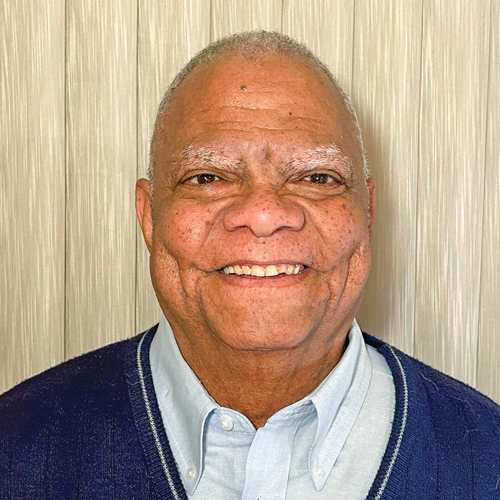
Harry Monteagudo / Monroe Township, New Jersey
Living Buddhism: Thank you, Harry, for telling us about your faith journey and what kosen-rufu means to you. How did you start practicing Buddhism?
Harry Monteagudo: I had been playing baseball for the Chicago Cubs organization, but was released because of an injury. I was a hopeless 22-year-old college dropout, living at home with my parents and brother. Actually around that time, I bought a puppy, thinking it would cheer me up, but when I brought it home, it bit my finger! I was really hopeless!
I remember one day walking down 83rd street in New York thinking desperately: How can I change my life? What do I have to do?
The next thing I knew, someone came up to me and asked, “How would you like to change your life?” She told me about Nam-myoho-renge-kyo and invited me to a meeting right down the street. I walked in as the meeting was ending, but the members invited me in anyway. It was the first time I saw the Gohonzon, and I can’t really explain it, but I felt I had come home. Everyone welcomed me so warmly, and I knew there was something profound about this practice.
Soon after, on February 24, 1974, I received the Gohonzon. We squeezed 23 people into my tiny bedroom for the enshrinement, and even my mother joined us. I didn’t have many friends back then, so being surrounded by people who supported me felt incredible. Looking back, that was my very first glimpse of kosen-rufu, a community fighting together for each person’s happiness.
What was it like practicing back then?
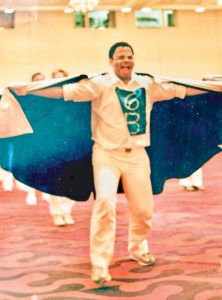
Harry: I jumped right into SGI activities. I was in the Brass Band and learned how to do Gajokai and Soka Group and support activities behind the scenes. I really enjoyed it.
The district members also really took care of me. The women’s district leader called me every day and encouraged me to play an active role in every meeting by serving as emcee or sharing an experience. My young men’s leader taught me gongyo. He would come to my house every morning at 5 a.m. to teach me. There were many days I was sleeping and didn’t answer the door, but what really impressed me was that he continued to come by every single day for three months. The days I didn’t answer, he would slip a note under my door saying: “I’m sorry I missed you. I’ll be back tomorrow.” I will never forget him. He taught me about sincerity and the spirit to never give up on people.
Once I learned gongyo, my life started changing. Little by little I started receiving tremendous benefits, both visible and invisible.
What were some of those benefits?
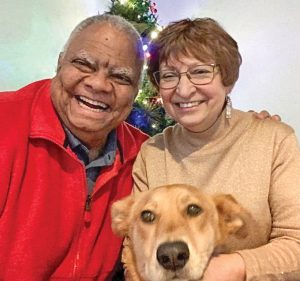
Harry: Two things I chanted for early on were a rewarding career and a life partner. I met my wife, Marie, while I was still a young men’s division member. We married in 1985, and she remains the greatest benefit of my life.
With her support, I went back to college and earned my master’s degree. I became a certified athletic trainer, which led me back to professional baseball in the Atlanta Braves organization and later to a fulfilling career at a large high school in New Jersey. I retired in 2021.
As I chanted, supported youth activities and read The Human Revolution, I started to have dreams—and the courage to pursue them. Above all, my greatest benefit was finding a mentor in Daisaku Ikeda.
Can you say more about that?
Harry: At first, I struggled to understand the mentor-disciple relationship. Reading The Human Revolution, I wondered why Sensei worked for President Toda even when he couldn’t pay him. My family grew up poor—my parents always worked multiple jobs, and my brother and I worked from a young age, so I couldn’t fathom working without pay.
But over time, I realized Sensei wasn’t working for President Toda for money—he was fighting side by side with him for kosen-rufu, for the happiness and dignity of all people, something much greater than his own personal interests. That spirit moved me deeply. I wanted to understand who he truly was.
After Sensei was forced to step down as Soka Gakkai president in 1979, there was chaos in the SGI-USA. Many people who had supported me no longer supported Sensei. Youth division activities were halted. In 1981, I asked a senior in faith what I should do. He told me: “Stick with Sensei. That decision will determine the rest of your life.”
His words shook me to the core. Deciding to walk the path of mentor and disciple is what has helped me continue a lifelong vow for kosen-rufu.
Looking back, what has your relationship with Sensei taught you?
Harry: Sensei has taught me how to take responsibility for my life, my happiness, my environment and the people around me. He taught me that the greatest joy in life comes from helping others win. Through his guidance, I have found my place in the world and a deep understanding of how I want to live.
He also taught me how to take responsibility for the future of our world. As we look toward 2028 and 2030, people often say, “It’s up to the youth.” But, I believe it’s up to all of us. Every day, I ask myself: How can I encourage one person today? How can I not give up on someone who’s struggling? That’s my mission.
Kosen-rufu is found in those seemingly small efforts to listen to another person’s struggles, teach them gongyo even if they don’t always open the door and be their genuine friend.
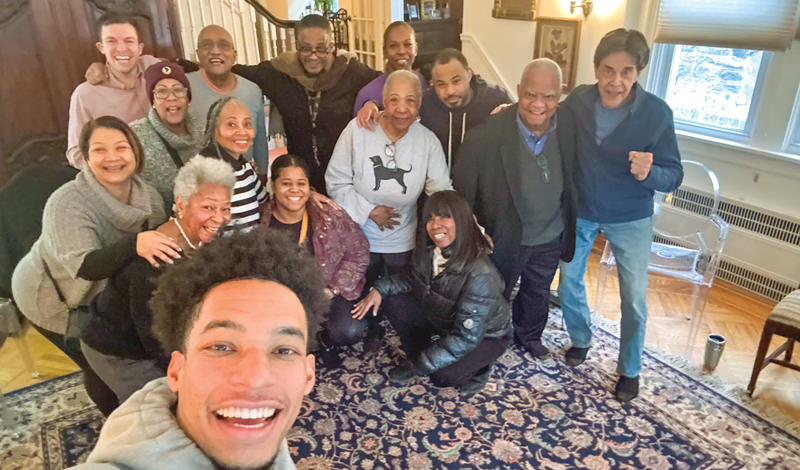
Thank you. Yes, it seems that kosen-rufu is truly expressed in those steady efforts to support and never abandon another person.
Harry: Absolutely. Recently, I was looking at Sensei’s calligraphy “Shared Struggle.” The inscription says, “I continue to pray that I will have true comrades.”
I’m determined to be one of those comrades—to advance Sensei’s vision of a peaceful, humanistic world. My vow for kosen-rufu is to do my part, every single day, in encouraging and uplifting the people right in front of me.
From the January Living Buddhism
References
- The Wisdom for Creating Happiness and Peace, part 3, revised edition, pp. 414–15. ↩︎
- Discussions on Youth, p. 262. ↩︎
- Ibid., 262–63. ↩︎
- The Lotus Sutra and Its Opening and Closing Sutras, p. 330. ↩︎
- The World of Nichiren’s Writings, vol. 1, p. 6. ↩︎
- Ibid., 7. ↩︎
- WCHP, part 3, revised edition, p. 26. ↩︎
- Discussions on Youth, p. 264. ↩︎
- The World of Nichiren’s Writings, vol. 1, p. 92. ↩︎
- Ibid., 186. ↩︎
- Ibid. ↩︎
- Ibid., 282. ↩︎
- Ibid., 61. ↩︎
- WCHP, part 3, revised edition, 124. ↩︎
- “The Heritage of the Ultimate Law of Life,” The Writings of Nichiren Daishonin, vol. 1, p. 217. ↩︎
- WCHP, part 3, revised edition, 145–46. ↩︎
- The World of Nichiren’s Writings, vol. 1, p. 114. ↩︎
- Ibid., 308. ↩︎
- WCHP, part 3, revised edition, 1. ↩︎
- The New Human Revolution, vol. 30, pp. 811–12. ↩︎
You are reading {{ meterCount }} of {{ meterMax }} free premium articles